
Cookies Policy
The website need some cookies and similar means to function. If you permit us, we will use those means to collect data on your visits for aggregated statistics to improve our service. Find out More
Accept Reject
  • Menu
About

About

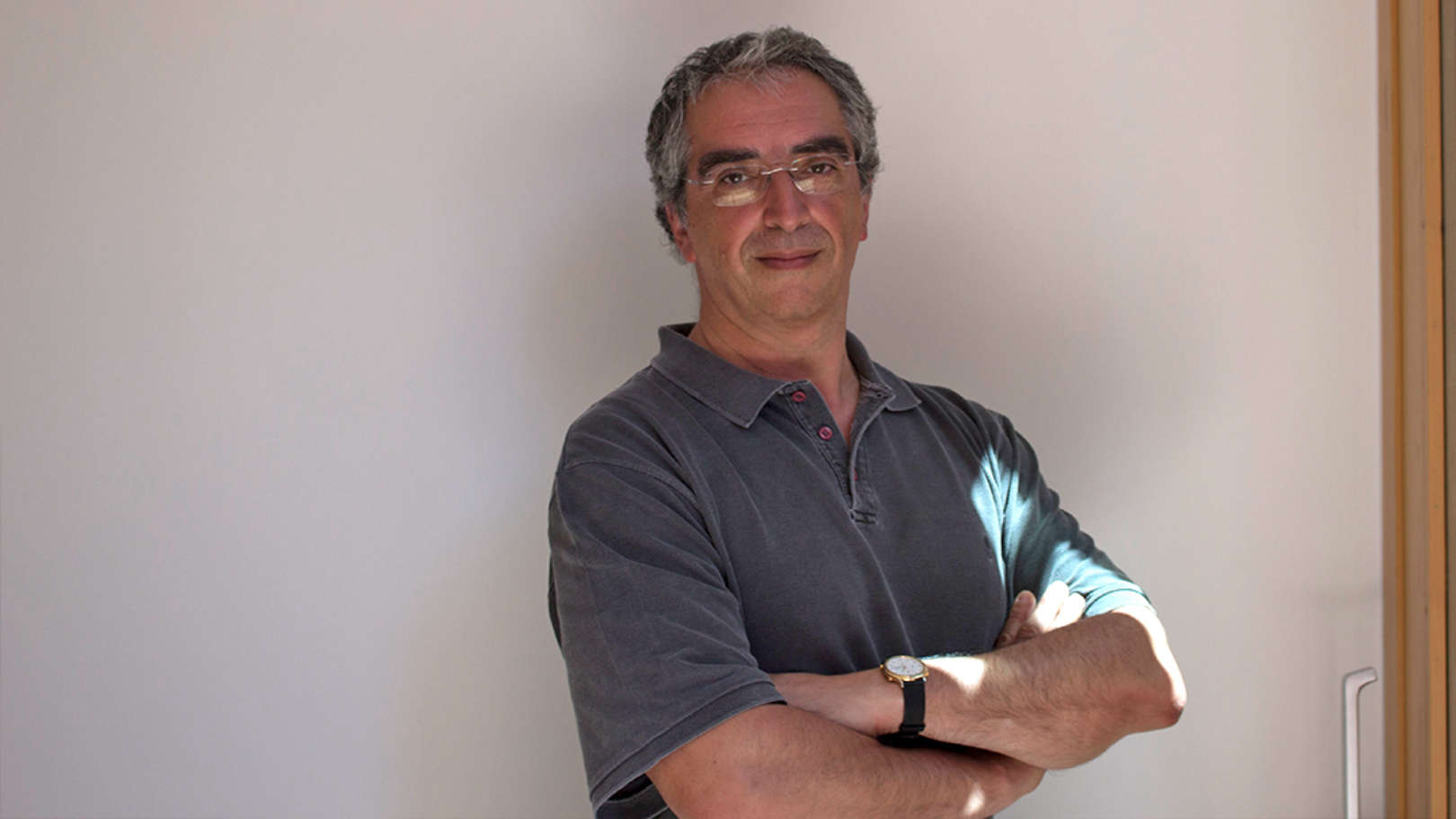
I am Full Professor at the Department of Informatics at the University of Minho, and senior researcher at the High Assurance Software Laboratory (HASLab INESC TEC). Since October 2016, I am also serving as Deputy Head of UNU-EGOV, the United Nations University Operational Unit on Policy-driven Electronic Governance (egov.unu.edu).

My research interests are focused on program semantics and calculi applied to systems understanding and rigorous software construction. I am particularly interested in coalgebra theory and conductive reasoning, as well as on modal and hybrid logics.

In recent years I coordinated four research projects at the national level, bilateral partnerships with Brazil and China, and served as the Portuguese coordinator for the Language Engineering and Rigorous Software Development ALFA EU-Latin America network, a PhD training network funded by the European Union. I have published five book chapters, 25 journal papers and more than 60 international conference papers. Having served as invited lecturer in MSc and PhD programmes at the Universities of Bristol (United Kingdom), Tartu (Estonia), and Peking (China), I have supervised several PhD projects (six concluded; four on-going). One of my students, Alexandre Madeira, received the 2013 IBM Scientific Prize, the biggest award in Informatics in Portugal.

I integrated the founding team of the Joint Doctoral Programme in Computer Science of the Universities of Minho, Aveiro, and Porto (MAP-i), and served as its Director. I am a member of IFIP WG1.3 (Foundations of System Specification), and, since January 2019, chair of IFIP Tecnhical Committee TC1 on Foundations of Computer Science.

Currently, I am leading the Quantum Software Engineering Research Group at INL, the International Iberian Nanotechnology Laboratory.

Interest
Topics
Details

Details

  • Name

    Luís Soares Barbosa
  • Role

    Research Coordinator
  • Since

    01st November 2011
005
Publications

2025

Specification of paraconsistent transition systems, revisited

Authors
Cunha, J; Madeira, A; Barbosa, LS;

Publication
SCIENCE OF COMPUTER PROGRAMMING

Abstract
The need for more flexible and robust models to reason about systems in the presence of conflicting information is becoming more and more relevant in different contexts. This has prompted the introduction of paraconsistent transition systems, where transitions are characterized by two pairs of weights: one representing the evidence that the transition effectively occurs and the other its absence. Such a pair of weights can express scenarios of vagueness and inconsistency. . This paper establishes a foundation for a compositional and structured specification approach of paraconsistent transition systems, framed as paraconsistent institution. . The proposed methodology follows the stepwise implementation process outlined by Sannella and Tarlecki.

2025

Paraconsistency for the Working Software Engineer (Extended Abstract)

Authors
Barbosa, LS;

Publication
SOFTWARE ENGINEERING AND FORMAL METHODS, SEFM 2024

Abstract
Modelling complex information systems often entails the need for dealing with scenarios of inconsistency in which several requirements either reinforce or contradict each other. This lecture summarises recent joint work with Juliana Cunha, Alexandre Madeira and Ana Cruz on a variant of transition systems endowed with positive and negative accessibility relations, and a metric space over the lattice of truth values. Such structures are called paraconsistent transition systems, the qualifier stressing a connection to paraconsistent logic, a logic taking inconsistent information as potentially informative. A coalgebraic perspective on this family of structures is also discussed.

2025

Exploring a Quantum Programming Language with Concurrency

Authors
Jain, M; Fernandes, V; Madeira, A; Barbosa, LS;

Publication
Companion Proceedings of the 9th International Conference on the Art, Science, and Engineering of Programming, Programming 2025, June 2-6, 2025, Prague 1, Czechia

Abstract

2025

Bridging resource theory and quantum key distribution: geometric analysis and statistical testing

Authors
D'Urbano, A; de Oliveira, M; Barbosa, LS;

Publication
QUANTUM INFORMATION PROCESSING

Abstract
Discerning between quantum and classical correlations is of great importance. Bell polytopes are well established as a fundamental tool for such a purpose. In this paper, we extend this line of inquiry by applying resource theory within the context of network scenarios, to a Quantum Key Distribution (QKD) protocol, BBM92. To achieve this, we consider the causal structure P3 to describe the protocol, and we aim to develop useful statistical tests to assess it. Our objectives are twofold: firstly, to utilise the underlying causal structure of the QKD protocol to produce a geometrical analysis of the resulting nonconvex polytope, with a focus on the classical behaviours, and secondly to devise a test within this framework to evaluate the distance between any two behaviours within the generated polytope. This approach offers a unique perspective, linking deviations from expected behaviour directly to the quality of the quantum resource involved or the residual nonclassicality in protocol execution.

2025

Hybrid quantum-classical algorithm for near-optimal planning in POMDPs

Authors
Cunha, G; Ramôa, A; Sequeira, A; Oliveira, Md; Barbosa, LS;

Publication
CoRR

Abstract

Supervised
thesis

2023

Time-structure in measurement-based quantum computation

Author
Michael de Oliveira

Institution
UM

2023

Continuous-time Quantum Walks

Author
Jaime Pereira Santos

Institution
UM

2023

Timing Constraints in Quantum Programming Languages

Author
Vítor Emanuel Gonçalves Fernandes

Institution
UM

2022

Timing Constraints in Quantum Programming Languages

Author
Vítor Emanuel Gonçalves Fernandes

Institution
UM

2022

Continuous-time Quantum Walks

Author
Jaime Pereira Santos

Institution
UM